Using electric cooling plates correctly
What to consider when using contact cooling, positioning your unit and running it day to day.
Compare modelsSetting up and using electric cooling solutions correctly
Answers about electric contact cooling, positioning, food presentation and the low-maintenance technology used in TOGETHER cooling solutions.
How it works and where to use it
How does a TOGETHER electric cooling solution work?
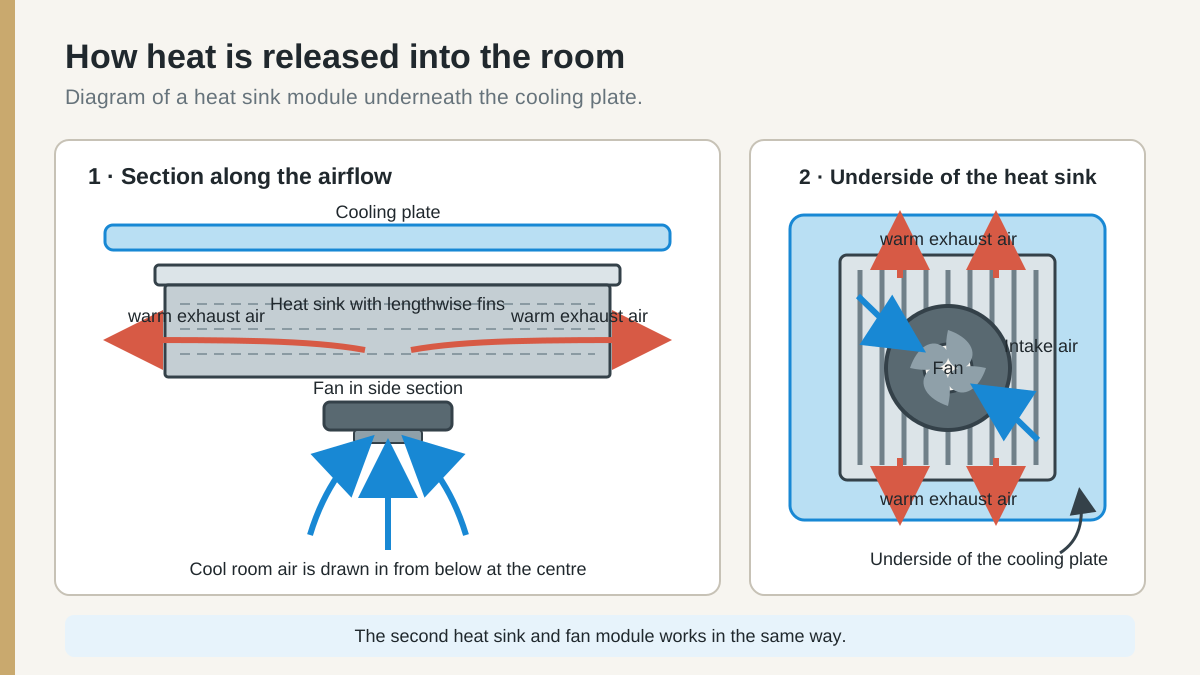
Electric cooling modules remove heat from the cooling surface. A heat sink and built-in fan release that heat into the surrounding air. The unit therefore needs no ice cubes, ice packs, eutectic plates, compressor or refrigerant.
What is contact cooling?
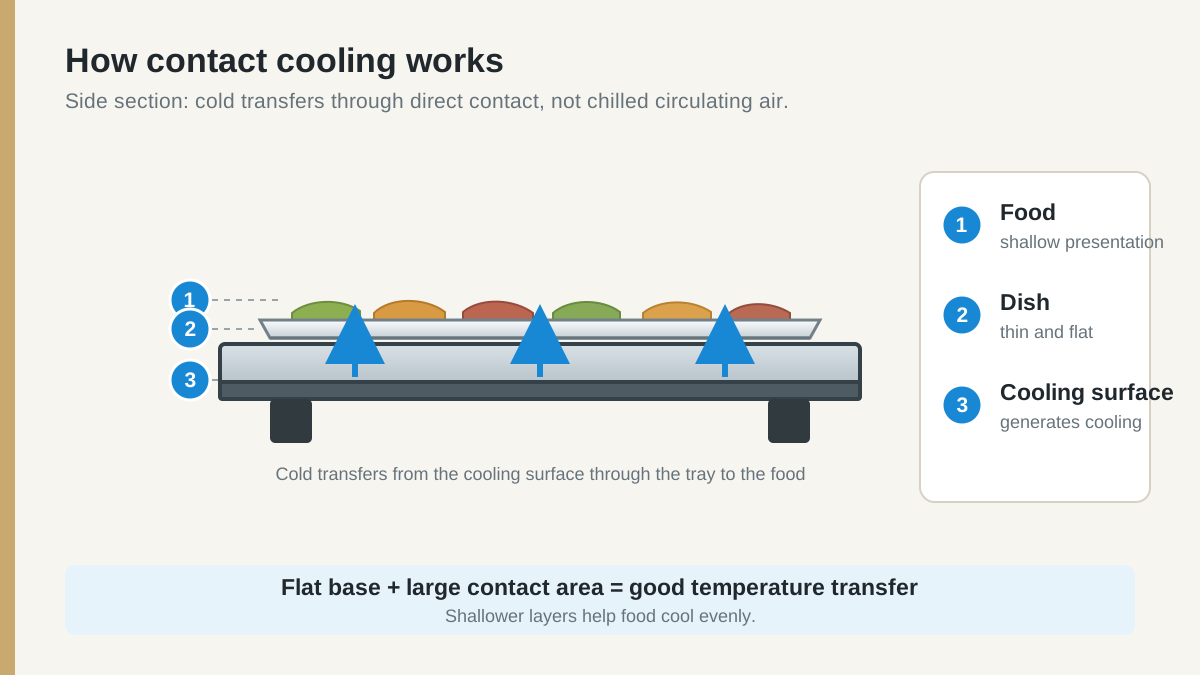
Cold from the plate surface must pass through flat-bottomed, thermally conductive dishes to the food placed on them. Within the food, cooling spreads from the chilled contact areas.
Is this fan-assisted air cooling?
No. Chilled air does not circulate around the food. Direct contact between the cooling surface, presentation dishes and food is what matters. The fan underneath removes waste heat generated by electric cooling; it does not cool the food by blowing air over it.
How should I present food on a contact-cooled surface?
Arrange pre-chilled food evenly and avoid unnecessarily high piles to help temperature transfer. Shallower layers and as much contact as possible with the chilled dishes make contact cooling more effective. For larger quantities, replenish food as needed.
Why is unrestricted airflow important?
Cooling generates waste heat underneath the unit. The fan must be able to remove it freely. Blocked air inlets or outlets can reduce cooling performance and cause overheating or malfunctions.
Does the cooling system need a compressor or refrigerant?
No. Cooling is generated by electric cooling modules. The units have no compressor or refrigerant-filled circuit, so no refrigerant or compressor oil is used.
What noise does the unit make?
The built-in fans produce audible airflow and motor noise during operation. With no compressor, there are no typical compressor, start-up or refrigerant noises such as humming, switching or gurgling. How noticeable the fan noise is depends on the surroundings and positioning.
What surface temperature do the units reach?
At an ambient temperature of 22°C, the cooling plates maintain a surface temperature of approximately +1°C to +6°C, depending on the model and operating conditions. Higher ambient temperatures, direct sunlight, heat sources or restricted ventilation can affect the temperature achieved.
Are the units suitable for continuous operation?
The units are designed for continuous electric operation, provided they are correctly positioned, adequately ventilated and used only with the appropriate original power supply.
Can the cooling plate replace a refrigerator?
No. The units are designed to present chilled food during service. Cooling can run 24/7, but the units are not intended for food storage and do not replace a refrigerator or freezer.
Can I cool down warm food on the unit?
These cooling solutions are intended to display food that has already been adequately chilled. They are not blast chillers and are not designed to cool warm food safely.
Positioning and ventilation
Where can I position the unit?
Use the unit only in dry, enclosed indoor spaces, on a hard, level, stable and non-flammable surface, such as a suitable counter or a table with sufficient load capacity.
Can the unit stand on a tablecloth?
No. Tablecloths, fabrics and other soft materials can be drawn into the unit or cover its underside ventilation openings, restricting airflow and heat dissipation.
How much clearance is required?
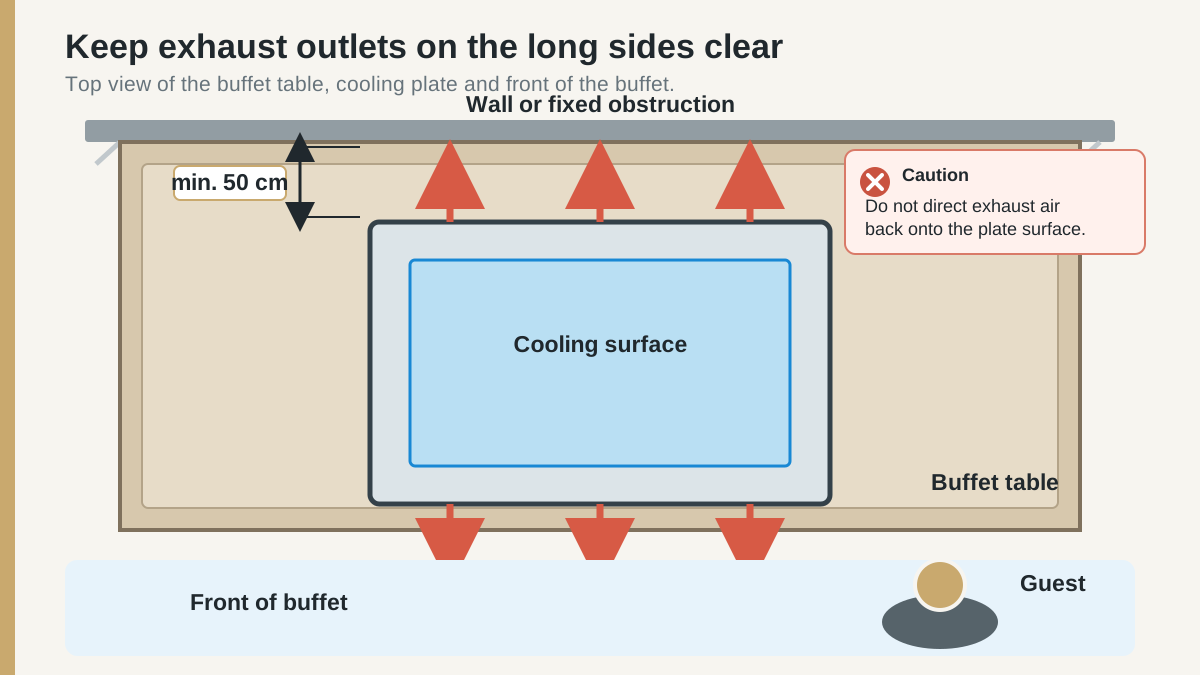
Warm exhaust air exits along the broad sides of the unit. Leave at least 50 cm between these sides and walls, other equipment or any other obstruction.
How should multiple units be arranged side by side?
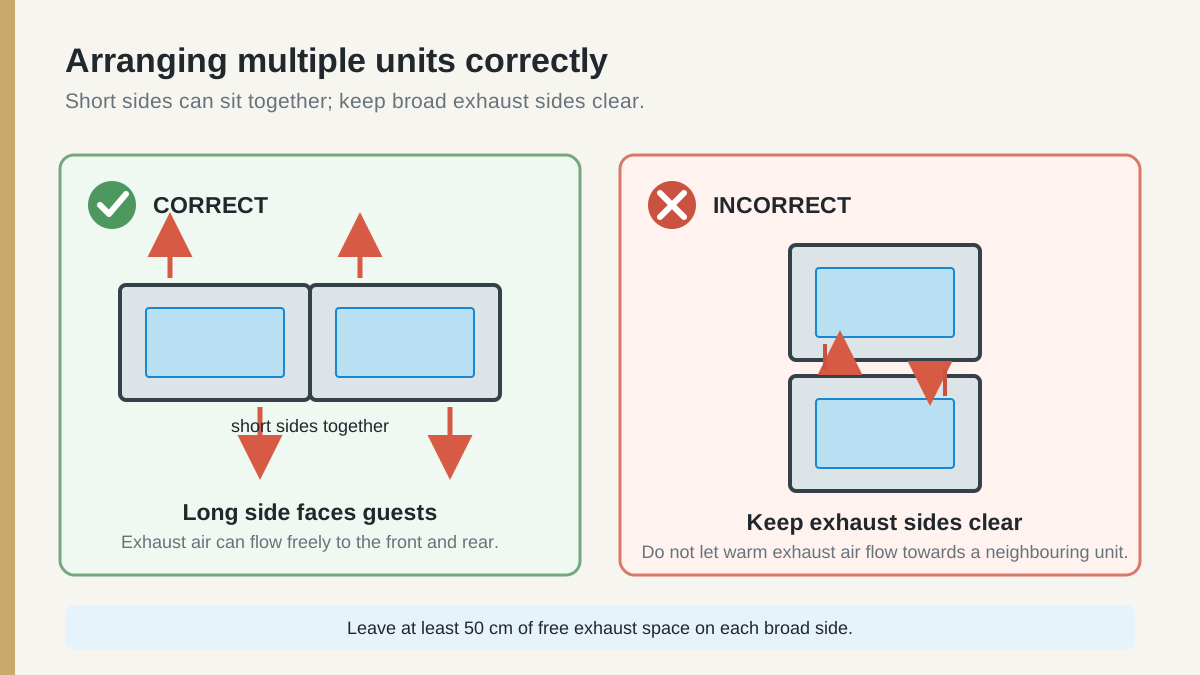
Units may be placed next to each other along their short sides, with their long sides facing guests. Maintain at least 50 cm clearance along the long, broad exhaust sides. No unit should draw in warm exhaust air from a neighbouring unit.
Why must exhaust air not flow back onto the cooling surface?
If a wall, panel or other object deflects warm exhaust air upwards, it can warm the cooling surface and the food on it. Position the unit so exhaust air can flow freely sideways and away.
Can a draught blow across the cooling surface?
No. Draughts reduce the cooling effect and bring warm room air into contact with the food. Do not place the unit directly in front of open windows, doors, ventilation outlets, air conditioning units or other draughty areas.
Can I place the unit in sunlight or next to a heat source?
No. Direct sunlight, warm exhaust from other equipment and proximity to ovens, cooking appliances or other heat sources can seriously reduce cooling performance and place thermal stress on the unit.
Can heat lamps or heated gantries be fitted above the unit?
No. Do not install or operate heat lamps, heated gantries or similar heat sources above the cooling solution. The extra heat can reduce cooling performance and damage components.
Where should I put the power supply?
Place the original power supply in a dry, cool, well-ventilated location. Do not cover it, enclose it tightly or position it close to a heat source. The power supply may become warm during use.
Power supply and preparation
Which power supply can I use?
Use only the TOGETHER original power supply supplied with, or expressly approved for, this model. Do not use other power supplies, even if their connectors or voltage specifications look similar.
Can I connect the cooling plate directly to the mains?
No. First connect the cooling plate to its original power supply using the intended connection. Then connect the power supply to a properly installed, earthed mains socket.
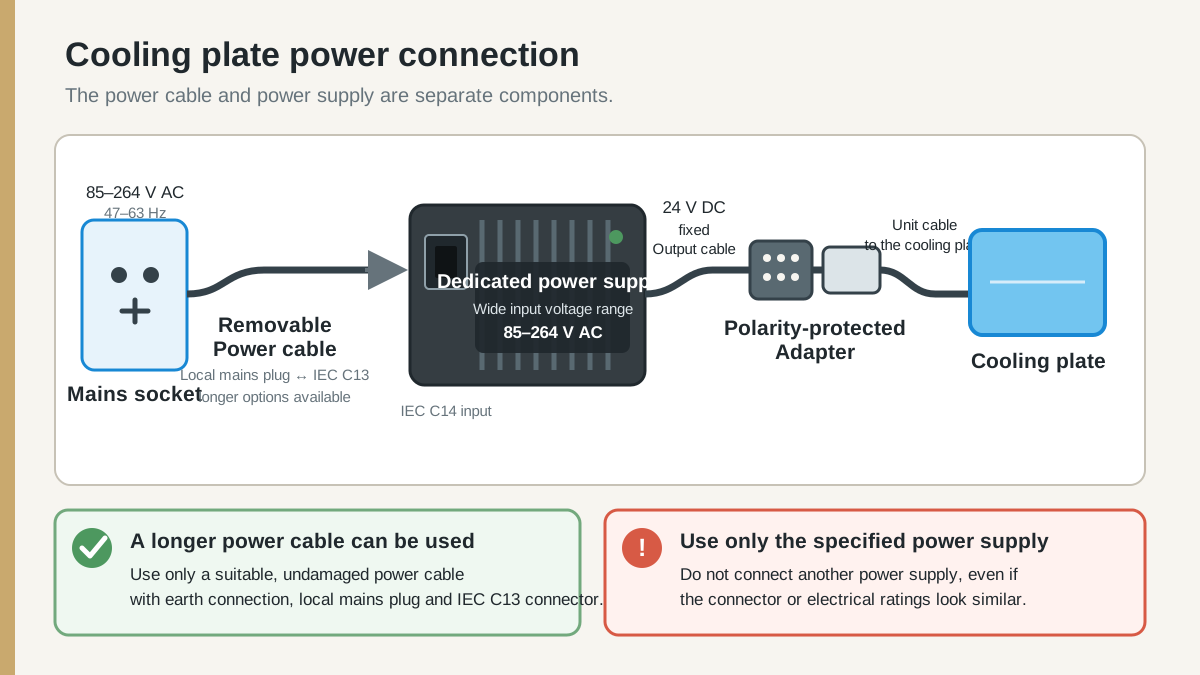
How long before service should I switch on the unit?
Switch on at least 30 minutes before placing pre-chilled food on the unit, so the cooling surface can stabilise. In less favourable conditions, allow more time.
Food presentation and daily operation
Which dishes are suitable for the cooling surface?
Use presentation platters and containers with flat, even bases and good thermal conductivity, especially stainless steel. The better and more complete their contact with the cooling surface, the more effectively cold can transfer.
Can I use dishes with uneven bases?
Uneven, curved or partially contacting bases reduce the effectiveness of contact cooling and may significantly impair temperature transfer.
Can I place food directly on the cooling surface?
No. Do not present food directly on the unit's surface. Use suitable food-safe presentation dishes or the GN components specified for the model.
Are all models suitable for GN 1/1?
Suitability and method of use vary by model. Some cooling plates can take GN 1/1 dishes on top; the buffet systems have dedicated GN 1/1 stainless steel trays. Please refer to the individual product description.
Can warm exhaust air be directed at food?
No. Do not place food or temperature-sensitive objects near the air outlets. Warm exhaust air must be able to flow freely into the room.
Low-maintenance cooling technology
Why are the units considered low-maintenance?
The units have no compressor or refrigerant circuit. There are therefore no refrigerant pipes to check for leaks or top up during use. The key regular maintenance task is to keep fans and air passages free of dust, fibres and other dirt.
Are refrigerant leak checks required?
TOGETHER cooling solutions contain no refrigerant or refrigerant circuit. Leak checks for equipment containing certain fluorinated greenhouse gases under the EU F-gas Regulation therefore do not apply to these units.
General operating, safety and inspection requirements at the place of use must still be followed.
What care do the fans need?
Keep the fans underneath and all associated inlet, outlet and heat-dissipation areas free of dust, fibres and dirt. Waste heat can be removed reliably only with unrestricted airflow. Follow the care instructions for your particular model.
Disposal
What does the design mean for material use and recycling?
Aluminium is the main material in the current cooling plates. Based on the material assessment, it accounts for more than 80% of the unit's weight. At the end of its service life, aluminium can be recovered through established recycling streams. Actual recovery depends on proper dismantling and local disposal facilities.
The aluminium percentage describes material composition. It does not mean that 80% of every returned unit is actually recycled.